Physical Layer⚓︎
Definition⚓︎
What?
Instead of representing physical mediums, physical layer is a standard:
- Electrical Specification: The logic level is used in
+10v ~ +15vto represent binary0;-10v ~ -15vto represent binary1. - Physical Specification: Such as timing, rates, distances, modulation, and connectors.
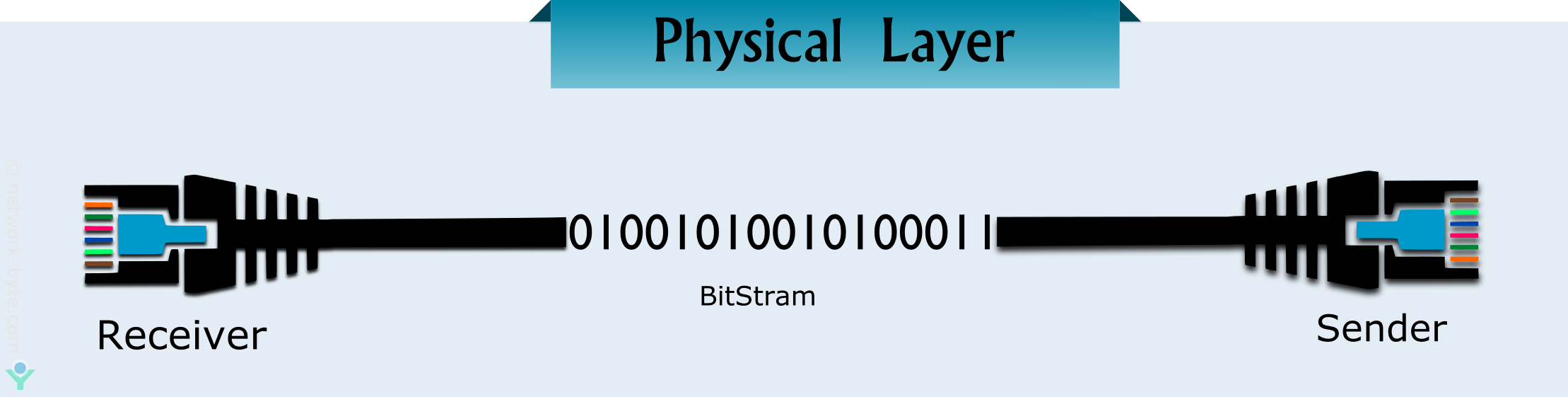
- Rules: For transmission media interfaces -- transmission and reception of raw
bit streams.
Transmission Mediums⚓︎
Transmission Mediums
There are three major types:
- Copper (electrical).
- Optical Fiber (light).
- WIFI (RF).
Optical Fiber for network?
Principles of optical fiber communication:
graph LR
    A["Device (network card)"]-- electrical signal -->B([transportation])
    subgraph Optical Fiber
    B-. optical pulse .->C([Before the server])
    end
    C-- electrical signal -->D[server]
Why faster?
In the time sequence, turning on the light pulse means 1, and turning off the light pulse means 0.
Since the frequency of visible light is about 10~8 MHz, the bandwidth of the optical fiber communication system is much larger than that of other transmission media.
Repeater?
Background?
The signal power transmitted on the physical medium will gradually decay. When the attenuation reaches a certain level, the signal will be distorted. Thus the reception error will be caused.
What?
Repeater is a device that can regenerate and restore the signal to increase the transmission distance of the signal.
Note!
The two ends of the repeater are connected to different network segments, NOT subnets.
Example!
-
wireless: Normally, we can see a wireless
repeateras aWIFI extender. There is a free Ad. here 😆: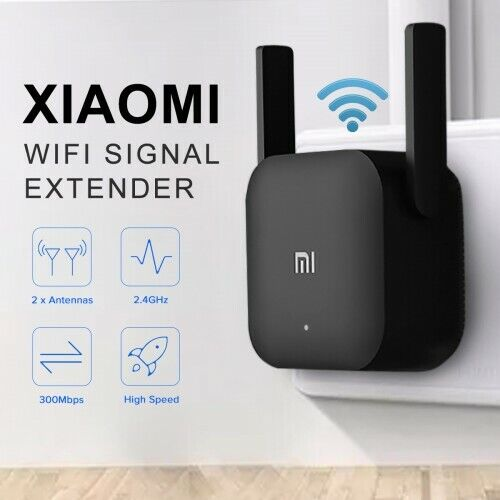
-
wired: The old school uses wired ones:
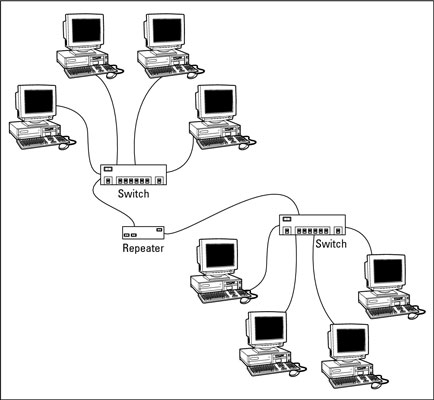
Cons⚓︎
Cons of Physical Layer
There are three major cons that Physical Layer has:
- No access control (e.g. "entrance guard").
- No collision detection (e.g. "traffic police") → there are collisions.
- No uniquely identified devices (e.g. "workers without names in one office").
- No device communications (e.g. "cannot find specific worker since he/she doesn't have a name").
